

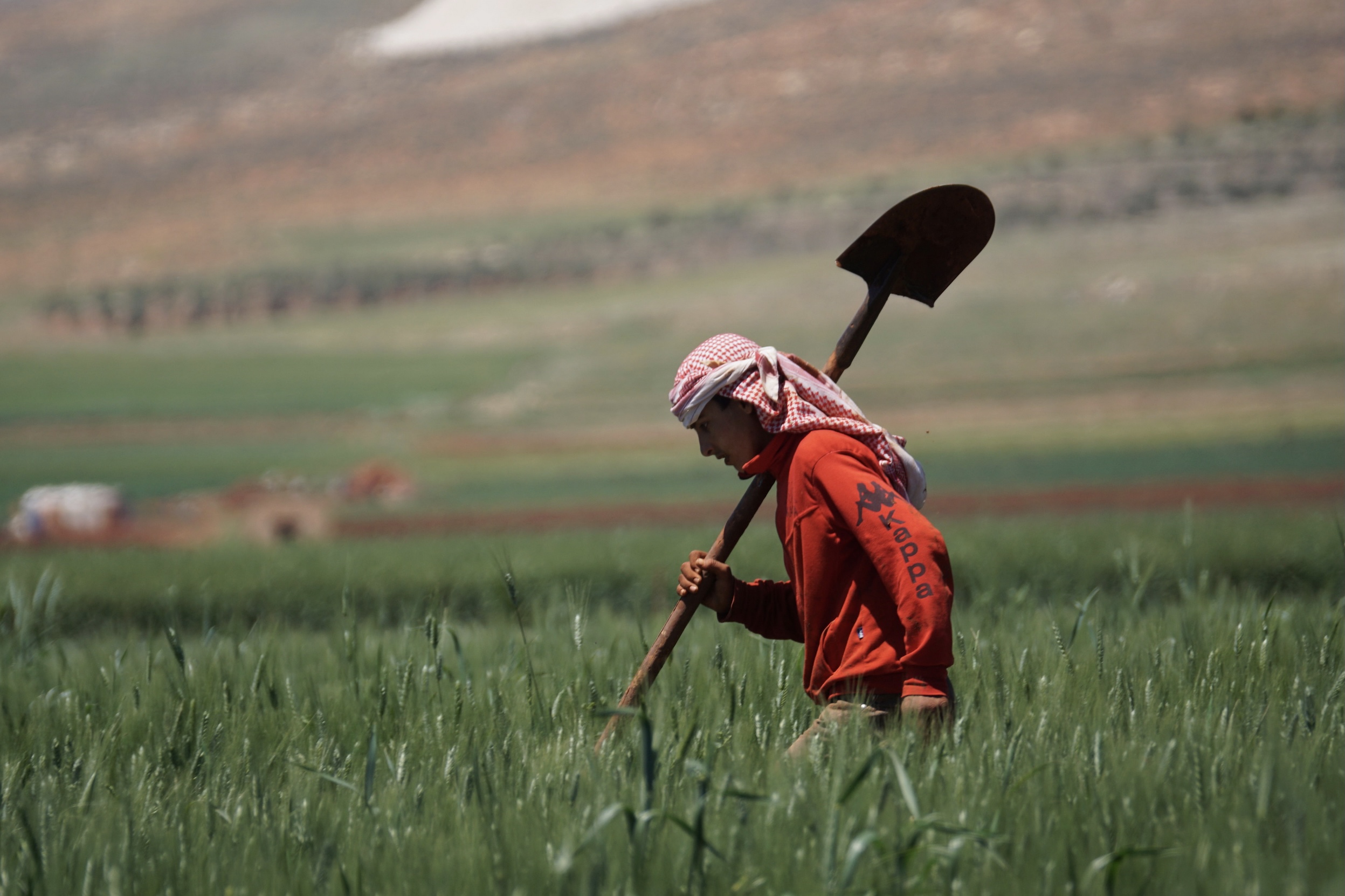
As Lebanon grapples with yet another devastating conflict, its agricultural heartland lies in ruins. More than 54,000 hectares of fertile farmland — an area roughly the size of Chicago — have been destroyed or severely damaged in the 2023-2026 Israel-Hezbollah war, with the south bearing the heaviest toll. Once the engine of Lebanon’s food production, supplying up to 70% of the country’s citrus and 90% of its bananas, the region’s orchards, olive groves, and vegetable fields have been scorched, bulldozed, or contaminated. With 76–80% of southern farmers forced to abandon their lands and over 1.24 million people projected to face acute food insecurity, the war has triggered what the World Food Program describes as Lebanon’s most serious food security crisis in its history.
Lebanese agriculture, a key sector in danger
Lebanon’s agricultural sector, historically a cornerstone of rural livelihoods and food production in the fertile Bekaa Valley and southern regions, faces existential threats amid ongoing conflict, economic collapse, and environmental stressors. The southern lands, known for their rich soil, higher rainfall, and groundwater reserves, have long been vital for cultivating olives, citrus fruits, bananas, tobacco, grains, vegetables, and supporting livestock and beekeeping. These areas account for a disproportionate share of national output, including around 70% of citrus and 90% of banana production.
Despite agriculture’s relatively modest contribution to GDP in recent decades, the sector remains essential for employment, income generation (particularly among smallholders, who comprise about 80% of farms in the south), domestic food supply, and exports to neighboring markets. Successive crises since 2019—including economic meltdown, the Beirut port explosion, and multiple rounds of conflict—have already severely undermined its resilience. The escalations from October 2023 onward, particularly the intensified Israel-Hezbollah confrontations since March 2026, have inflicted unprecedented damage.
Israeli military operations have scorched vast stretches of farmland, destroyed orchards and infrastructure, and caused widespread displacement. Lebanese officials report that over 54,000–56,000 hectares of agricultural land—roughly the size of Chicago and representing about 22–22.5% of the country’s total farmland—have been directly affected, with heavy concentration in the south (including over 18,500 hectares there). This includes the destruction or damage of thousands of olive, citrus, banana, and fruit trees, tobacco fields, greenhouses, irrigation networks, and bridges (such as those over the Litani River), which have severed farmers’ access to land and markets.
Displacement has been equally devastating: 76–80% of southern farmers have been forced to abandon their lands due to evacuation orders, ground operations, and the establishment of an Israeli buffer zone. Livestock losses exceed 1.8 million poultry and animals, with over 29,000 beehives destroyed and significant aquaculture damage (around 2,030 tons of fish).
Reports also highlight the use of white phosphorus and excessive glyphosate spraying along a 17 km border strip, raising concerns over long-term soil and water contamination that could render land unusable for years. These direct impacts compound broader challenges, including drought and the legacy of prior conflicts. The result is a sharp deterioration in food security. The Integrated Food Security Phase Classification (IPC) projects that 1.24 million people will face acute food insecurity (IPC Phase 3 or worse) in the coming months, unable to meet basic needs without resorting to harmful coping strategies. The World Food Program has described this as potentially the most serious food security crisis in Lebanon’s history, with risk levels rising notably (e.g., from 17% to 27% in some assessments).
This report examines Lebanese agriculture in these times of war and destruction. It provides historical context, analyses pre-war vulnerabilities and current impacts, assesses socio-economic and environmental consequences, evaluates recovery challenges and resilience factors, and offers policy recommendations. Drawing primarily on official Lebanese Ministry of Agriculture assessments and international reporting as of mid-2026, it underscores how conflict has pushed the sector to a breaking point, threatening not only rural economies but national stability and food sovereignty.
Historical context of conflict and agriculture
Lebanon’s agriculture has repeatedly borne the brunt of prolonged conflicts, creating a cycle of destruction, displacement, and incomplete recovery. Prior to the 1975–1990 Civil War, the sector played a more significant role in the economy and rural employment. The 15-year conflict caused massive infrastructure damage, land abandonment, widespread landmining, and shifts in production patterns, including a surge in illicit crops in the Bekaa Valley.
The 2006 Israel-Hezbollah war inflicted further heavy losses. A 34-day conflict destroyed crops, livestock, and irrigation systems, with damages to agriculture, fisheries, and forestry estimated at around USD 280 million. Up to 85% of farmers lost crops valued at USD 135–185 million, alongside substantial livestock losses. Oxfam and FAO assessments highlighted long-term inter-temporal economic impacts, including reduced productivity and slow rebuilding of orchards.
These historical episodes established patterns of vulnerability: destruction of productive assets (especially in southern Lebanon and the Bekaa), displacement of farming communities, contamination of land, and weakened institutional capacity. Post-Taif Agreement recovery remained partial, leaving smallholder-dominated agriculture exposed.
The 2019 economic collapse, compounded by the Beirut port explosion and Syrian refugee inflows, further eroded resilience before the 2023–2026 escalations. Current devastation — with tens of thousands of hectares destroyed — echoes these earlier crises but occurs against deeper pre-existing fragilities.
This recurring exposure underscores agriculture’s strategic importance for food security and rural stability, while highlighting the need for more robust, conflict-resilient policies.
Pre-war and structural baseline
Prior to the intense escalations of 2023–2026, Lebanon’s agricultural sector already operated under significant structural vulnerabilities exacerbated by the 2019 economic crisis. Agriculture contributed approximately 3–9% to GDP (with the broader agri-food system closer to 13%), while employing around 4% of the total labor force directly, with much higher shares in rural areas when including part-time and family labor.
The sector was dominated by smallholders. In southern Lebanon, small farms accounted for about 80% of agricultural properties. The south played a disproportionately critical role in national production, supplying around 70% of the country’s citrus and 90% of its banana output, alongside significant contributions to olives, tobacco, vegetables, and livestock. Agriculture represented up to 80% of local GDP in some southern and peripheral regions, serving as a vital lifeline for rural employment and income.
Key challenges included heavy reliance on imports for inputs (fertilizers, fuel, seeds), water scarcity, fragmented landholdings, outdated infrastructure, and climate risks. The sector faced declining productivity, limited access to finance, and the impacts of the Syrian refugee crisis on labor markets and resource competition. The National Agriculture Strategy 2020–2025 aimed to address these through productivity enhancement, sustainability, and resilience-building, but implementation was hampered by fiscal collapse. These pre-existing fragilities — smallholder dominance, regional concentration of production in conflict-prone areas, and economic instability — made the sector particularly susceptible to the shocks of renewed warfare. Minister Nizar Hani later noted that most agricultural production originates from the south, underscoring its strategic importance.
Direct impacts of recent conflicts (2023–2026)
The recent escalations of the Israel-Hezbollah conflict, particularly from October 2023 and intensifying after March 2026, have delivered catastrophic direct blows to Lebanon’s agricultural sector. Israeli military operations have caused widespread physical destruction of farmland, crops, livestock, and supporting infrastructure, concentrated overwhelmingly in southern Lebanon.
According to Lebanon’s Ministry of Agriculture, more than 54,000 to 56,000 hectares of farmland — roughly the size of Chicago and representing approximately 22–22.5% of the country’s total agricultural land — have been directly affected. Of this, over 18,500 hectares lie in the south. The damage spans 64 southern towns and villages.
Key crops and orchards have suffered severe losses. Citrus, banana, and olive trees were hit hardest, with more than 11,000 hectares of fruit trees and nearly 6,600 hectares of olive groves damaged or destroyed. Tobacco fields, a critical cash crop, saw around 1,600 hectares razed. Vegetable production, greenhouses, grains, and legumes were also heavily impacted.
Livestock and related sectors recorded devastating losses. The Ministry reported over 1.8 million poultry and livestock killed. More than 29,000 beehives were destroyed, alongside a 49% decline in beehive numbers overall. Aquaculture suffered the loss of approximately 2,030 tons of fish, with a 39% drop in fish production.
Displacement has been one of the most immediate and crippling effects. Between 76% and 80% of southern farmers were forced to abandon their lands due to evacuation orders, ground operations, and the establishment of an Israeli buffer zone (referred to as the “Yellow Line”). This has prevented planting, harvesting, and maintenance activities across vast areas. Small farmers, who constitute about 80% of agricultural properties in the south, have been hit hardest.
Infrastructure destruction has compounded the physical damage. Irrigation networks, agricultural facilities, and vital bridges — including those over the Litani River — were destroyed or rendered unusable. This has isolated farmers from their fields and cut off supply chains to markets. Farmland has been bulldozed, and homes that doubled as operational bases for farmers have been damaged.
Chemical contamination has raised serious long-term concerns. Lebanese officials, including Minister Nizar Hani, have highlighted the use of white phosphorus, which reportedly burned around 40,000 mature olive trees in 2023 alone. Additionally, Israeli forces allegedly sprayed concentrated glyphosate along a 17 km border strip at levels far exceeding normal agricultural use. Samples analysed by the Ministry revealed significant soil and ecosystem impacts, with residues potentially persisting for years.
These actions have scorched fields, degraded soil fertility, and raised fears that some land may become unusable for extended periods. The south’s fertile soil, higher rainfall, and groundwater reserves — which made it the engine of Lebanon’s citrus (70% of national production), banana (90%), olives, tobacco, and vegetable output — have been severely compromised.
Economic losses from agriculture alone reached around €800 million (approx. USD 850–880 million) in the first year of conflict. By April 2026, broader economic damage to Lebanon from the war exceeded $20 billion, with agricultural impacts having roughly doubled from initial estimates. Many losses — particularly the destruction of long-lived orchards and infrastructure — are not immediately compensable and will require years for recovery.
Minister Nizar Hani has repeatedly emphasized that most of Lebanon’s agricultural production originates from the south. He distinguished between short-term losses (e.g., seasonal crops) that can eventually be compensated and structural damage (trees, greenhouses, irrigation) that cannot be quickly reversed. Efforts were made, in coordination with the Lebanese army, to relocate livestock and beehives to safer areas, but these were only partial solutions amid ongoing insecurity.
In summary, the direct impacts have not only destroyed current-season production but have also damaged the productive base of Lebanese agriculture for years to come. The combination of physical destruction, mass displacement, infrastructure collapse, and chemical contamination has pushed the sector into an acute crisis.
Food security crisis looming
The conflict has pushed Lebanon toward its most severe food security crisis in its history. According to the Integrated Food Security Phase Classification (IPC), 1.24 million people are projected to face acute food insecurity (IPC Phase 3 or worse) in the coming months. Families are struggling to meet basic needs, resorting to reduced food quality/quantity and harmful coping strategies. The World Food Program and FAO have warned of critical risks to national food security, driven by agricultural collapse, mass displacement, and rising food and fuel prices.
Livelihood losses have been devastating, particularly for smallholders who make up about 80% of farms in the south. With 76–80% of southern farmers displaced and unable to tend their lands, rural unemployment and poverty have surged. Broader economic damage from the war now exceeds $20 billion, with agricultural losses estimated at around €800 million in the first year alone (later roughly doubled). Multiplier effects include disrupted supply chains, lost exports (especially citrus and bananas), and impacts on related sectors such as food processing and trade. Many farmers face years of recovery for destroyed orchards and infrastructure, deepening rural despair and hindering return even after ceasefires.
Environmental consequences
Environmental damage raises long-term concerns of ecocide. Reports document widespread soil and water contamination from white phosphorus and excessive glyphosate spraying along a 17 km border strip. Thousands of olive, citrus, and fruit trees have been burned, alongside destruction of forests (~5,000 ha in earlier phases) and biodiversity loss. Lebanese officials, including from the Ministry of Environment, describe systematic reshaping of the physical landscape, with residues potentially rendering land unproductive for years. Combined with drought and reduced rainfall, these effects threaten the south’s fertile soil, groundwater reserves, and higher-rainfall advantages.
These interconnected crises — acute hunger risks for over a million people, mass livelihood collapse, and potential permanent environmental degradation — not only threaten rural stability but also national resilience and food sovereignty. Recovery will require years, even under optimistic security scenarios.
Challenges to recovery and elements of resilience
Recovery of Lebanon’s agricultural sector faces formidable challenges. The destruction of long-lived assets such as olive, citrus, and banana orchards will require many years to restore, with some losses described by Minister Nizar Hani as “cannot be compensated” in the short term. Soil and water contamination from white phosphorus and excessive glyphosate spraying along a 17 km border strip poses a serious long-term threat, potentially rendering parts of the most fertile southern lands unproductive for extended periods.
Ongoing security risks, including the Israeli buffer zone (“Yellow Line”), continued displacement of 76–80% of southern farmers, and destroyed infrastructure (irrigation networks and Litani River bridges) severely limit farmers’ ability to return and resume operations. These difficulties are compounded by Lebanon’s deep economic crisis, capital shortages, and drought conditions that further strain water resources.
Some adaptive measures have been implemented. The Ministry of Agriculture, in coordination with the Lebanese army, has relocated livestock and beehives to safer areas. Minister Hani noted that certain seasonal crop losses can eventually be compensated, offering a degree of hope for partial and faster recovery in annual production compared to permanent tree crops. Traditional farmer adaptability and potential international support (e.g., Swiss-backed water and agricultural projects) provide limited but important resilience factors. However, full recovery remains heavily dependent on sustained ceasefire, demining, land remediation, and substantial financial assistance.
Policy recommendations and future outlook
Immediate short-term priorities should focus on emergency humanitarian assistance. This includes rapid provision of seeds, fodder, and veterinary support for surviving livestock, alongside cash transfers to displaced farmers. Urgent demining, soil remediation for white phosphorus and glyphosate contamination, and temporary water infrastructure repairs are essential to enable safe returns.
Medium- to long-term measures must include a revised National Agriculture Strategy that prioritizes climate-resilient and conflict-resilient practices, rehabilitation of destroyed orchards and irrigation systems (especially in the south), and financial compensation mechanisms for irreplaceable losses such as mature fruit trees. Minister Nizar Hani has stressed the distinction between compensable seasonal losses and permanent structural damage, calling for targeted support. International donors and organizations (FAO, WFP, and bilateral partners such as Switzerland) should coordinate substantial reconstruction funding, technical assistance for land remediation, and market access support. Efforts to diversify production away from high-risk southern concentration and strengthen value chains are also critical.
Recovery remains highly uncertain and heavily dependent on the durability of any ceasefire, withdrawal from the buffer zone, and regional stability. Without sustained peace and large-scale investment, southern Lebanon risks permanent loss of productive capacity, worsening food insecurity for over a million people and deepening rural poverty. Optimistically, successful remediation and farmer return could enable partial recovery of annual crops within 1–2 seasons, while full orchard restoration may take 5–10 years.
Lebanon’s agriculture sector, long a pillar of rural livelihoods and national food production, has been pushed to the brink by the 2023–2026 conflict. The destruction of approximately 54,000–56,000 hectares of farmland — an area roughly the size of Chicago — the loss of tens of thousands of productive trees, over 1.8 million livestock and poultry, and the displacement of 76–80% of southern farmers represent a devastating blow, particularly as the south supplies the majority of the country’s citrus, bananas, olives, and vegetables.
These impacts have triggered Lebanon’s most serious food security crisis in its history, with over 1.24 million people projected to face acute food insecurity. Environmental contamination from white phosphorus and glyphosate further threatens long-term soil fertility and groundwater quality, while broader economic losses exceed $20 billion.
Nevertheless, signs of resilience offer cautious optimism. Minister of Agriculture Nizar Hani has noted that while some losses — especially mature orchards and infrastructure — cannot be quickly reversed, seasonal production can recover and be compensated with timely support. Partial relocation of livestock and beehives, combined with the inherent adaptability of Lebanese farmers, demonstrates the sector’s enduring strength. A realistic path to recovery hinges on a durable ceasefire, safe farmer return, land remediation, and substantial international assistance. With targeted investment in resilient infrastructure, soil rehabilitation, and updated national strategies, Lebanese agriculture can rebuild stronger. The sector’s revival is not only vital for rural economies and food sovereignty but also for broader national stability and hope in the face of repeated adversity.


