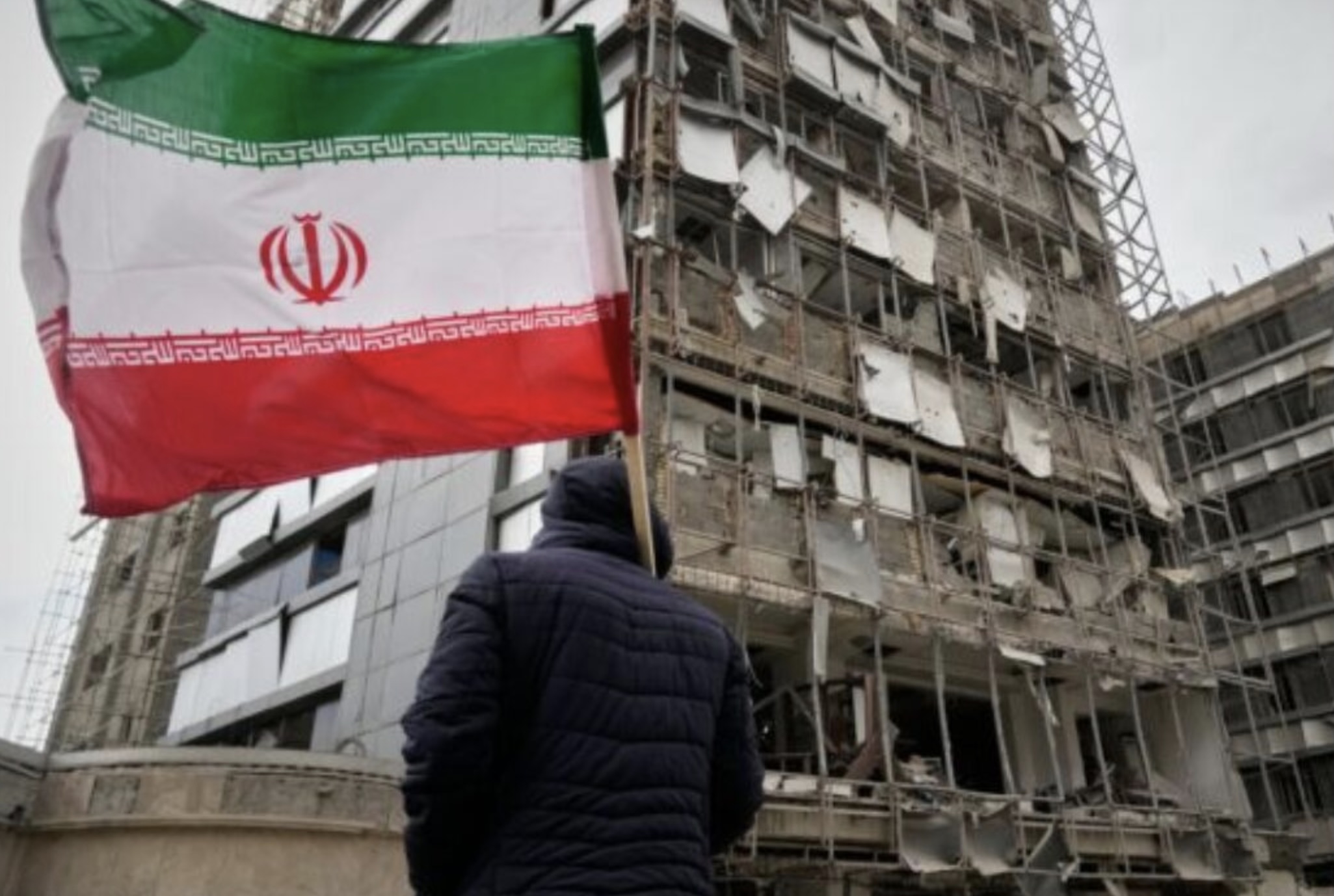
The war that erupted on February 28, 2026—when the United States and Israel launched coordinated strikes on Iran—has redrawn the Middle East’s security map with startling speed. Known in Washington as Operation Epic Fury and in Jerusalem as Operation Roaring Lion, the campaign began with a decapitation strike that killed Iran’s Supreme Leader, Ali Khamenei, at his Tehran residence. Within hours, Iranian command structures were in disarray.
Follow-on waves of precision attacks dismantled air defenses, ballistic missile batteries, production complexes, and key nuclear facilities, including Natanz. US officials reported localized air superiority over critical corridors, allowing sustained sorties with limited operational risk. Militarily, the opening phase was decisive. Strategically, however, its objectives appear more layered than the stated mission of halting Iran’s nuclear program and degrading its proxy network.
A growing body of analysis suggests the campaign may also serve a broader purpose: constraining China’s energy security by disrupting its access to discounted Iranian oil. In this reading, Tehran is both target and instrument—an arena where the intensifying US-China rivalry is being prosecuted indirectly.
From October 7 to Regional Conflagration
The conflict’s origins trace back to October 7, 2023, when militants from Hamas breached Israel’s border from Gaza, killing roughly 1,200 people—most of them civilians—and abducting 251 hostages in the deadliest attack on Jews since the Holocaust. Though Tehran denied direct operational control, Iran’s long-standing patronage of Hamas—through funding, arms transfers, and training—made it a central enabler.
Israel’s subsequent war in Gaza evolved into a grinding regional contest. Iran’s so-called “axis of resistance” mobilized across multiple fronts: Hezbollah in Lebanon fired thousands of rockets into northern Israel; the Houthis targeted Red Sea shipping; and Iranian-aligned militias in Iraq and Syria struck US installations. The United States, initially focused on deterrence and force protection, found itself increasingly engaged—intercepting missiles, reinforcing naval patrols, and replenishing munitions at scale.
By late 2024, Israel had significantly degraded Iran’s forward posture. The assassinations of Hamas leader Yahya Sinwar and Hezbollah chief Hassan Nasrallah weakened Tehran’s most capable non-state partners. The fall of Syrian President Bashar al-Assad in December 2024 further disrupted Iran’s logistical corridors through the Levant, constricting weapons transfers and regional coordination.
Yet direct exchanges between Israel and Iran intensified. In April and October 2024, Iran launched large-scale missile and drone barrages at Israel; most were intercepted by layered Israeli defenses and US-led coalitions. Israeli retaliatory strikes exposed vulnerabilities in Iran’s air defense network without tipping the region into full war.
The Nuclear Flashpoint
The inflection point came in June 2025, when the International Atomic Energy Agency declared Iran non-compliant with its non-proliferation obligations for the first time in decades. Days later, Israel initiated a sweeping campaign against nuclear sites, missile factories, and senior commanders. Iran retaliated, triggering a 12-day conflict that drew in the United States, which deployed bunker-buster munitions against deeply fortified facilities beyond Israel’s reach.
A tenuous ceasefire held from late June, but negotiations soon collapsed. President Donald Trump revived a “maximum pressure” framework, demanding irreversible limits on uranium enrichment, missile development, and proxy support. Tehran refused. By early 2026, Iran’s regional network was diminished, domestic unrest simmered, and its air defenses appeared compromised. Washington and Jerusalem judged the strategic window narrow—and closing.
The February 28 strikes followed.
Retaliation and Risk
Iran’s response was immediate but constrained. Missile salvos toward Israel dwindled as launch infrastructure was destroyed. Asymmetric operations targeted US diplomatic and military assets across the Gulf, including facilities in Bahrain and Iraq. Disruptions in the Strait of Hormuz—through which roughly one-fifth of global seaborne oil passes—pushed Brent crude toward $82 per barrel, underscoring the conflict’s economic reverberations.
Hezbollah reentered the fray with sporadic rocket and drone fire, but its degraded arsenal limited impact. Israeli counterstrikes hit Beirut’s southern suburbs and logistical hubs in Lebanon. For Iran, the cumulative effect has been severe: leadership decapitation, shattered military assets, and mounting constraints on oil exports—the lifeblood of its economy.
Washington’s objectives appear expansive: neutralize Iran’s missile forces and naval capabilities, dismantle its nuclear ambitions, and break the architecture of proxy warfare that has defined Tehran’s regional strategy for decades. Yet such ambitions carry costs. Sustained operations strain munitions inventories and risk overextension at a time when US defense planners remain focused on the Indo-Pacific.
The China Variable
It is here that a second layer of strategy emerges. China imports an estimated 12 to 15 percent of its seaborne crude oil from Iran—often as heavily discounted shipments routed through shadow tanker networks to evade sanctions. Since 2021, this trade has been worth well over $100 billion, providing Tehran with critical revenue while furnishing Beijing with cost-effective energy to power its industrial base.
Iran is not merely another supplier; it is a sanctions-resilient node in China’s diversified energy portfolio, alongside Russia and Venezuela. Disruptions to Iranian flows—whether through contested Hormuz access, higher maritime insurance premiums, or infrastructure damage—tighten China’s energy margins. Approximately half of China’s Gulf imports transit Hormuz. Even the perception of instability raises input costs and complicates supply chains.
The timing of the strikes has sharpened this interpretation. The offensive preceded a planned summit between President Trump and Chinese leader Xi Jinping in Beijing in early April. Pre-summit leverage—particularly over energy security—could strengthen Washington’s hand in negotiations spanning trade, technology controls, and Taiwan. In a Taiwan contingency, secure westward energy routes would be critical for Beijing; constraining Iran narrows those options.
China’s reaction has been measured: rhetorical condemnation, calls for de-escalation, and no overt military support for Tehran. Beijing can pivot toward Russian crude and draw on strategic reserves, but sustained disruption would test an economy already navigating structural slowdown.
Competing Interpretations
Critics argue that nuclear prevention and regional stability remain the campaign’s primary drivers, and that any impact on China is incidental. The US-Israel coalition has, after all, long identified Iran’s nuclear trajectory and proxy warfare as direct threats.
Yet the pattern—targeting a principal supplier of discounted oil to China, following parallel pressure on Venezuela, and acting on the eve of high-stakes diplomacy—suggests energy leverage is not peripheral. It may be central.
If so, the war marks an evolution in great-power competition: energy chokepoints weaponized not merely to deter regional adversaries but to shape the strategic environment vis-à-vis Beijing. In that calculus, Iran becomes both battleground and bargaining chip.
An Uncertain Trajectory
As the conflict enters its second week, markets remain volatile, casualties mount, and diplomatic channels are thin. Iran and its proxies are weakened but not extinguished. The United States has demonstrated overwhelming force yet risks attritional strain. Russia, preoccupied with Ukraine, limits itself to diplomatic protest. China watches warily, balancing principle against pragmatism.
Whether this campaign ultimately prevents nuclear proliferation, accelerates regime destabilization in Tehran, or simply entrenches a new axis of confrontation will depend on its durability—and on Beijing’s response.
If the hypothesis of energy coercion proves correct, February 28, 2026 may be remembered less as the day Iran’s defenses fell than as the moment the contest with China entered a new, more combustible phase—where oil routes and missile corridors are threads of the same strategic fabric.