Lebanon, a land steeped in history and resilience, finds itself at a pivotal moment. From October 8, 2023, to December 20, 2024, a brutal conflict tore through its fabric, leaving behind a trail of destruction that has compounded an already dire economic and social crisis. The World Bank’s Lebanon Rapid Damage and Needs Assessment (RDNA) 2025 estimates that US$11 billion is required to rebuild — a staggering sum that reflects not just the cost of repairing buildings and roads, but the monumental task of restoring a nation’s spirit. This war, fought amid a backdrop of political paralysis and a collapsing economy, has devastated agriculture, plunged millions into hunger, and tested the endurance of a people long accustomed to adversity. Yet, in the shadow of this ruin, stories of courage emerge — farmers tilling scarred land, women leading rural revival, and youth planting sustainable futures.
The Agricultural Sector: A Foundation Under Fire
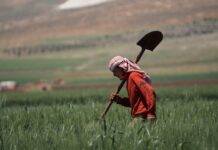
Lebanon’s agricultural sector, once the heartbeat of its rural economy, lies in ruins, a casualty of both war and decades of neglect. The recent conflict delivered a punishing blow: Israeli bombardments reduced nearly 2,000 hectares of farmland in South Lebanon to ash and rubble, while an additional 12,000 hectares were abandoned as farmers fled shelling and chaos. These losses ripple across the nation’s agricultural breadbaskets — the Bekaa Valley, a fertile expanse in the east known for grains and vegetables; Akkar, a northern stronghold of smallholder farms; and South Lebanon, famed for its olive groves, citrus orchards, and banana plantations. Matthew Hollingworth, WFP Lebanon Country Director, captures the desolation: “Fields that once fed families now rot under the sun. Olives, citrus, bananas — gone. Vegetables decay where they stand. War has severed our access, and with it, our ability to feed ourselves.”
The scale of destruction is breathtaking. In the village of Marjayoun, near the southern border, olive trees that stood for generations — some over a century old — were uprooted or incinerated, their gnarled trunks a testament to a heritage now lost. In the Bekaa, irrigation channels, painstakingly built to sustain crops through dry summers, lie shattered, their waters pooling uselessly amid debris. Akkar’s farmers, many of whom relied on modest plots to survive, report livestock slaughtered or scattered, their barns reduced to splintered wood. The Ministry of Agriculture has spotlighted a particularly egregious loss: the Houjeir Valley plant multiplication project, established in 2020 with World Food Programme and European Union support. This initiative aimed to produce seedlings for local farmers, strengthening food security and fostering sustainable growth. Its destruction, the ministry declared, “is an assault on Lebanon’s right to sustain itself, a violation of international laws protecting civilian life and infrastructure.”
Let’s be honest, this collapse didn’t begin with the war. Since the mid-20th century, Lebanon’s agriculture has withered under the weight of modernization and globalization. In the 1960s and 70s, the nation pivoted toward industry and services, sidelining rural economies. Imports surged, fueled by a then-stable lira and a burgeoning middle class hungry for foreign goods. By the 21st century, over 80% of Lebanon’s food came from abroad, a dependency that left local farmers struggling to compete. The conflict has turned this vulnerability into a crisis. Some 46,000 farmers — many from families who tilled the same land for generations — now face an existential question, as Hollingworth articulates: “They want to return, but to what? Fields scarred by bombs, soil tainted by chemicals, and a future where planting may be impossible for years?”
The economic toll is staggering — over US$1 billion in agricultural losses, encompassing destroyed crops, burned orchards, and wrecked infrastructure like silos and water pumps. In South Lebanon, once a hub for olive oil exports to Jordan and Syria, production has halted, leaving presses silent and barrels empty. The Bekaa’s vegetable harvests, which supplied Beirut’s markets, have dwindled, while Akkar’s smallholders, lacking resources to replant, turn to aid or abandonment. Beirut’s airport, a tenuous lifeline, remains critical — its runways ferry in imported grains and canned goods to a nation that can no longer grow enough to sustain itself. Without a robust agricultural revival, Lebanon risks becoming a permanent hostage to global supply chains, a fate its people can ill afford.
Economic Collapse: The Lira’s Fall and Its Ripple Effects
Lebanon’s economic descent forms the grim undercurrent of this agricultural nightmare, with the Lebanese lira’s collapse serving as both a catalyst and a mirror. The Wise platform ranks it as the world’s weakest currency, a title that places it below the Iranian rial, Syrian pound, and even the battered Sudanese pound. Globally, it trails currencies from nations like Vietnam, Laos, and Guinea — countries with their own struggles, yet none as precipitous as Lebanon’s. Since 2019, the economy has contracted by 34%, a decline punctuated by a 7.1% GDP drop in 2024, obliterating a modest 0.9% growth projection had peace held.
This implosion is no accident. The Central Bank of Lebanon, facing a cash-strapped government and a hemorrhaging economy, resorted to printing lira en masse, flooding the market with notes unbacked by reserves or production. The result? A currency that lost value faster than it could be spent. With over 80% of goods imported — everything from wheat to machinery — traders and citizens alike chased U.S. dollars, a scarce commodity in a nation where foreign reserves had evaporated. The mismatch drove the lira’s value into the abyss. Inflation, unleashed like a wildfire, soared past 200% since 2019, turning savings into dust and wages into a cruel joke. Unemployment spiked, businesses folded, and families who once shopped in bustling souks now scrounge for basics.
Political instability, a Lebanese hallmark, has only deepened the wound. Since the 2019 protests that toppled a government and birthed a vacuum, leadership has floundered, paralyzed by factionalism and corruption. Regional tensions — Syria’s war spilling over, Hezbollah’s clashes with Israel — have scared off investors, staunching the dollar inflows that once propped up the economy. “A weak currency is a weak economy writ large,” an economist observes, “but Lebanon’s case is extreme — crises layered atop crises, with no reform in sight.” The 2024 conflict was the final blow, shattering what little remained of economic stability.
For agriculture, the lira’s fall is a chokehold. Farmers, needing dollars for seeds, fertilizers, and fuel, face costs that have ballooned beyond reach. In Baalbek, a Bekaa farmer named Ali recounts selling his truck to buy one season’s supplies, only to watch his crop prices collapse as consumers, strapped for cash, turned to cheaper imports when available. In Akkar, a widow named Fatima, now running her late husband’s plot, describes bartering produce for essentials because cash has lost meaning. Urban markets, once a lifeline for rural goods, now favor imported rice over local lentils, leaving farmers with unsold harvests and mounting debts. This economic strangulation threatens not just agriculture, but Lebanon’s very ability to recover — a nation where money buys little, and hope buys less.
Assessing the Damage: A Collaborative Blueprint
To map Lebanon’s devastation, the government enlisted the World Bank, birthing the RDNA 2025 — a meticulous autopsy of a nation in distress. This assessment spans ten sectors: agriculture and food security, commerce, industry, and tourism, education, environment and debris management, energy, health, housing, municipal and public services, transport, and water systems. Partnering with the National Council for Scientific Research Lebanon, and supported by UN agencies and development allies, it employs the Post-Disaster Needs Assessment (PDNA) methodology, a gold standard crafted by the EU, World Bank, and UN.
The PDNA’s rigor is its strength. Teams fanned out across Lebanon, braving rubble-strewn roads to conduct ground surveys — counting fallen roofs in Nabatiyeh, gauging cracked dams in the Bekaa. Key informant interviews brought voices to the data: a schoolteacher in Beirut’s suburbs mourning lost classrooms, a farmer in Akkar tallying dead livestock. Visual inspections cataloged the tangible — schools reduced to husks, bridges split like twigs. High-tech tools amplified the effort: satellite imagery traced burned fields, Synthetic Aperture Radar pierced cloud cover to reveal hidden scars, anonymized cellphone data tracked the exodus of millions, and social media posts — cries for help, pleas for food — offered a pulse of public despair. This hybrid approach, blending boots-on-the-ground grit with digital precision, yields a portrait both granular and vast.
The verdict is brutal. The conflict’s economic cost totals US$14 billion — US$6.8 billion in physical ruin (think homes flattened, power lines severed) and US$7.2 billion in losses from stalled factories, vanished tourism, and soaring operational costs. Housing, the hardest hit, racks up US$4.6 billion in damages — entire neighborhoods in Beirut’s southern suburbs now ghostly shells, their residents camped in tents or crammed with kin. Commerce, industry, and tourism tally US$3.4 billion in losses, their once-thriving arteries — shops in Tyre, hotels in Byblos — clogged with silence. Nabatiyeh and South governorates, pounded relentlessly, emerge as ground zero, while Mount Lebanon, including Beirut’s fringes, reels from collateral blows. This isn’t just a balance sheet — it’s a blueprint, a call to rebuild with purpose and precision.
Funding the Future: Public and Private Roles
Reconstruction demands US$11 billion, a sum the RDNA splits into two streams. Public funding, pegged at US$3 to 5 billion, will tackle infrastructure — US$1 billion alone for energy, water, transport, and municipal services. Picture power grids relit in Sidon, water pumps humming in Tripoli, buses rolling again in Beirut. This is the state’s load, a Sisyphean task for a government bled dry by crisis and corruption. Private investment, ranging from US$6 to 8 billion, targets housing, commerce, industry, and tourism — sectors that could breathe life back into the economy if capital flows.
The stakes are immense. In Nabatiyeh, public funds might restore a shattered sewage system, but private builders must raise new homes from the ashes. In Beirut, state-repaired roads could lure hoteliers back, their investments hinging on stability. Yet this partnership teeters on fragile ground. Lebanon’s government, cash-strapped and distrusted, leans heavily on foreign donors — France, the Gulf, the EU — whose pledges often come with strings. Private investors, eyeing a nation of risk, demand guarantees against political chaos and currency collapse. A contractor in Beirut, eyeing a housing project, sums it up: “I’d build, but who pays me in dollars, and when?” Success requires a delicate alchemy — public will, private daring, and a shared belief in Lebanon’s rebirth, all in short supply.
Food Security in Crisis: A Humanitarian Emergency
The conflict has plunged Lebanon into a food security abyss, a crisis laid bare by a joint FAO-WFP-Ministry of Agriculture report. Some 1.65 million people now face crisis or emergency hunger, up 400,000 since early 2024. Over 200,000 endure dire conditions, a doubling since the Israeli-Hezbollah clashes peaked late last year. A November 2024 ceasefire, fragile but holding, has seen southern withdrawals and Lebanese troops with UN peacekeepers stepping in, yet hunger stalks the land unabated.
Refugees — Syrian and Palestinian — bear the heaviest load, with 40% facing critical shortages. In camps like Bourj el-Brajneh, families who fled Syria a decade ago now ration bread, their children gaunt. “Some go home post-ceasefire, but many have no home left,” Hollingworth warns. Vulnerability peaks among the young and female — 75% of under-fives eat monotonous diets, risking stunted growth and lifelong deficits. Syrian refugee kids, already on the margins, show stunting rates double the national average. Inflation, untamed, and the axing of wheat subsidies have pushed food prices skyward — olive oil once affordable now a luxury, bread a daily gamble. Families cope by skipping meals, trading nutrition for survival.
Aid races against collapse. WFP fed 750,000 in 2024, targeting 2.5 million in 2025, including 900,000 refugees, but funds lag and roads remain perilous. In Baalbek, a WFP truck dodged sniper fire to deliver rice, a small victory in a losing war. FAO’s Quattrola vows to replant fields, while Minister Abbas Al-Hajj Hassan pleads for global help: “Agriculture is our lifeline — without it, we starve.” The report forecasts persistent insecurity for months, a grim horizon unless aid and recovery align — a Herculean task in a nation stretched thin.
Regional and Global Partnerships
Nizar Hani, Agriculture Minister with a Ph.D. and a resume spanning UNESCO to Saudi advisory roles, drives recovery. His quadripartite pact with Syria, Jordan, and Iraq reboots trade — potatoes to Egypt, meat to Jordan — via Syria’s calming routes. Saudi talks eye Gulf markets, while a guidance program, launching soon, arms farmers against climate woes. Meetings with Jordan’s Walid al-Hadid and EU’s Sandra De Waele lock in support — the EU hails Hani’s “visionary push.” Lebanese University ties and economic powwows with Mohammad Choucair meld science and capital, targeting exports and modernity — a lifeline if chaos doesn’t choke it. Lebanon’s climb from ashes demands US$11 billion — public grit, private gamble — to rebuild homes, roads, lives. Agriculture, battered yet beating, is key, powered by women’s steel, youth’s green dreams, and global hands. A shaky ceasefire buys time, but recovery teeters on aid, will, and a reimagined land-fed economy. Hollingworth’s charge — “rebuild lives, not just stone” — echoes. Lebanon’s soul, resilient as its cedars, waits to rise — if the world, and its own, dare to lift it.